

Track Competitor Ads Automatically: Alerts, Changes & Daily Digest (2026)
Manual competitor ad tracking doesn’t fail because you’re lazy.
It fails because:
- competitors launch new creatives every week,
- they iterate rapidly,
- and the “winner signal” is not a single ad—it’s patterns over time.
The goal of competitor monitoring is simple:
Build a lightweight, always-on system that tells you what changed, what’s scaling, and what’s worth testing next.
This playbook gives you the system—and shows how to run it in Adlude Spyer.
Key takeaways
- Track too much and you’ll drown in noise. Track too little and you’ll miss pivots.
- The best alerts are about changes (new creatives, new hooks, new landing pages), not “everything.”
- “Creative lifecycle” and “long-running hooks” are strong winner proxies.
- Landing pages matter as much as ads—capture both.
What to track (and what not to track)
Track these (high signal)
- New creative launches (new concepts)
- New hooks (openers that repeat)
- Offer shifts (pricing, bundles, guarantees)
- Landing page changes (new pages, new angles)
- Format shifts (UGC → demo; carousel → video)
Don’t track these (low signal)
- every minor caption tweak
- every daily fluctuation
- “hot takes” without a test hypothesis
Step-by-step: the competitor tracking system
Step 1) Build a competitor shortlist
Use 3 tiers:
- Tier 1: direct competitors (same ICP)
- Tier 2: adjacent competitors (similar promise)
- Tier 3: aspirational (best-in-class creative)
Start with 5–10 brands total.
Step 2) Define your tracking “questions”
Tracking without questions becomes noise.
Good questions:
- What hooks are they repeating?
- What offers are they pushing this month?
- What landing pages are they routing traffic to?
- Are they testing new formats?
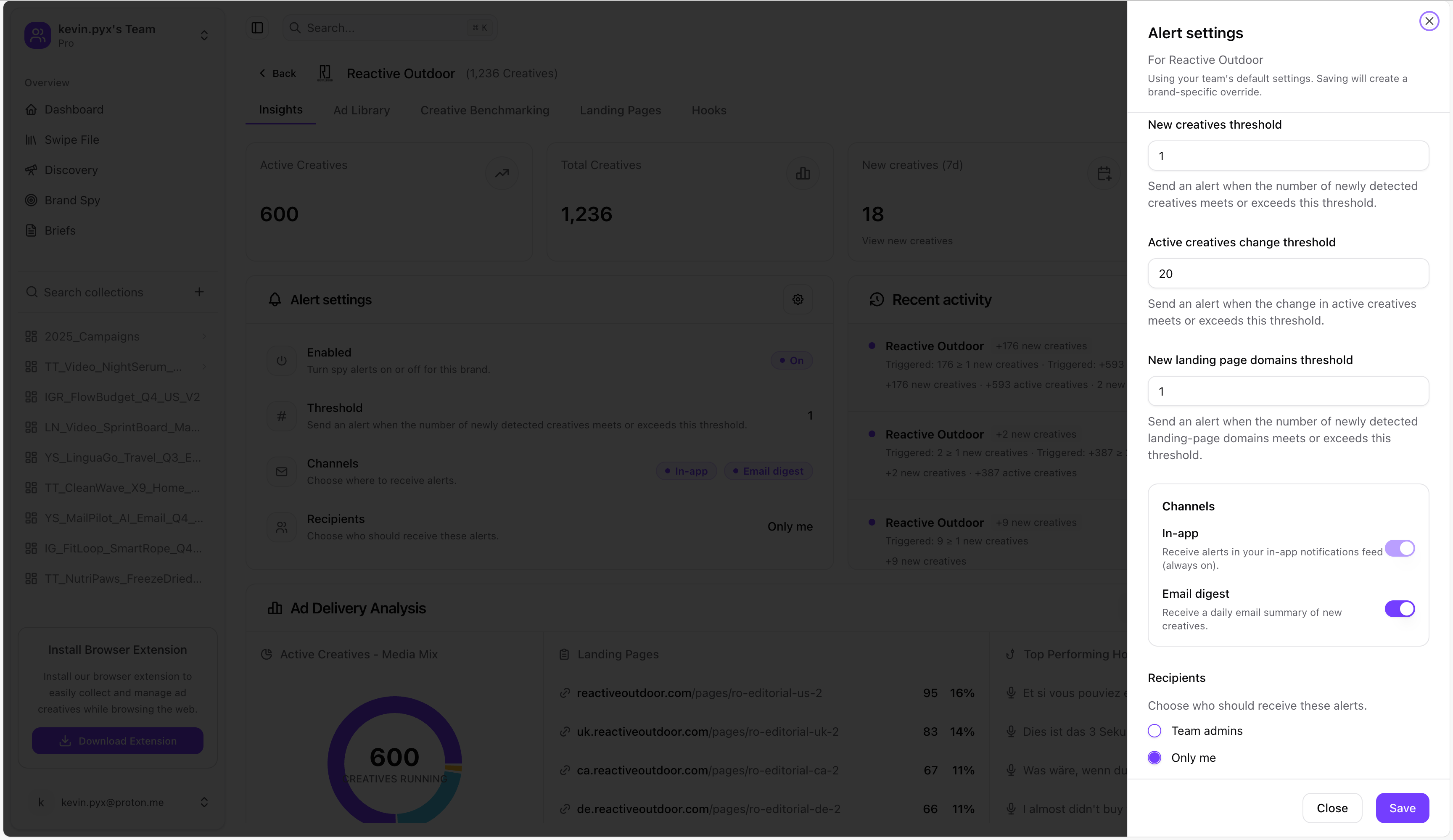
Step 3) Set alerts around “events”
Your alerts should be triggered by events like:
- new ad launch
- new landing page detected
- new hook appears repeatedly
- a concept persists (creative lifecycle signal)
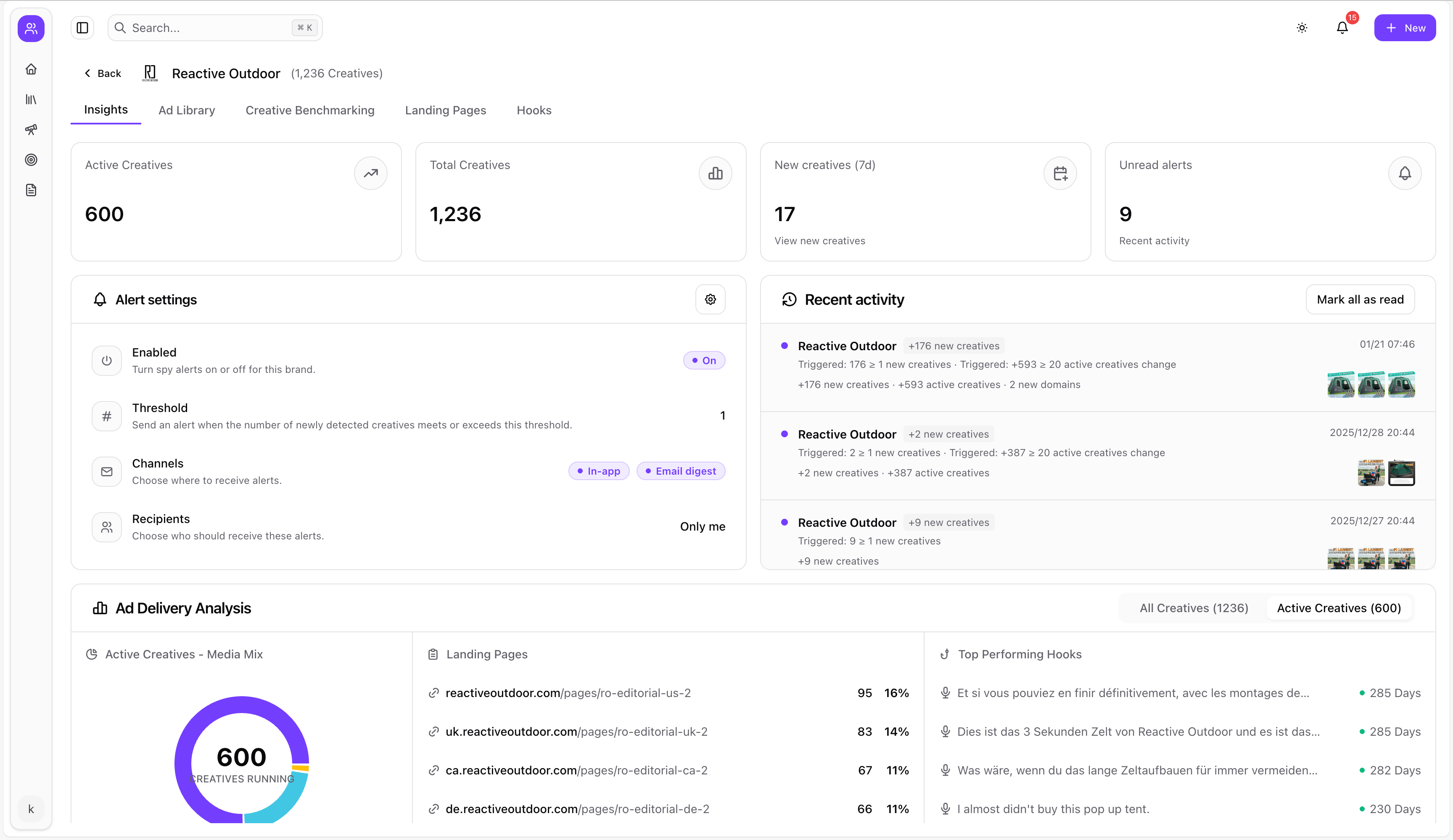
Adlude Spyer supports always-on tracking and real-time creative alerts (in-app + email), with dashboards and analysis features.
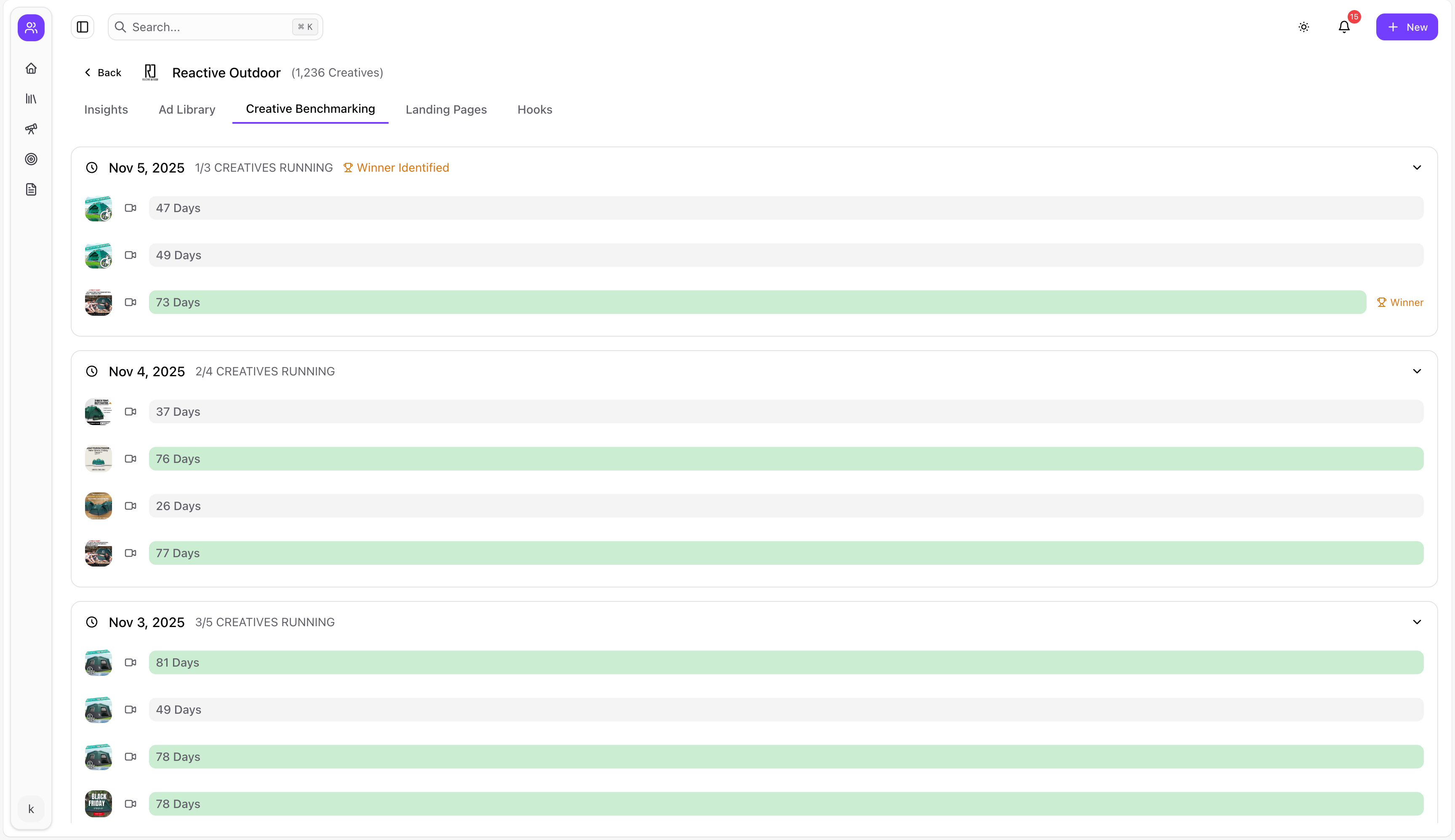
Step 4) Review lifecycle and A/B tests weekly
Weekly review is where insight compounds.
Look for:
- clusters of similar ads launched around the same date (test cells)
- one concept staying active while others fade (probable winner)
Adlude Spyer includes “Creative A/B Test Analysis” and “Creative Lifecycle” framing.
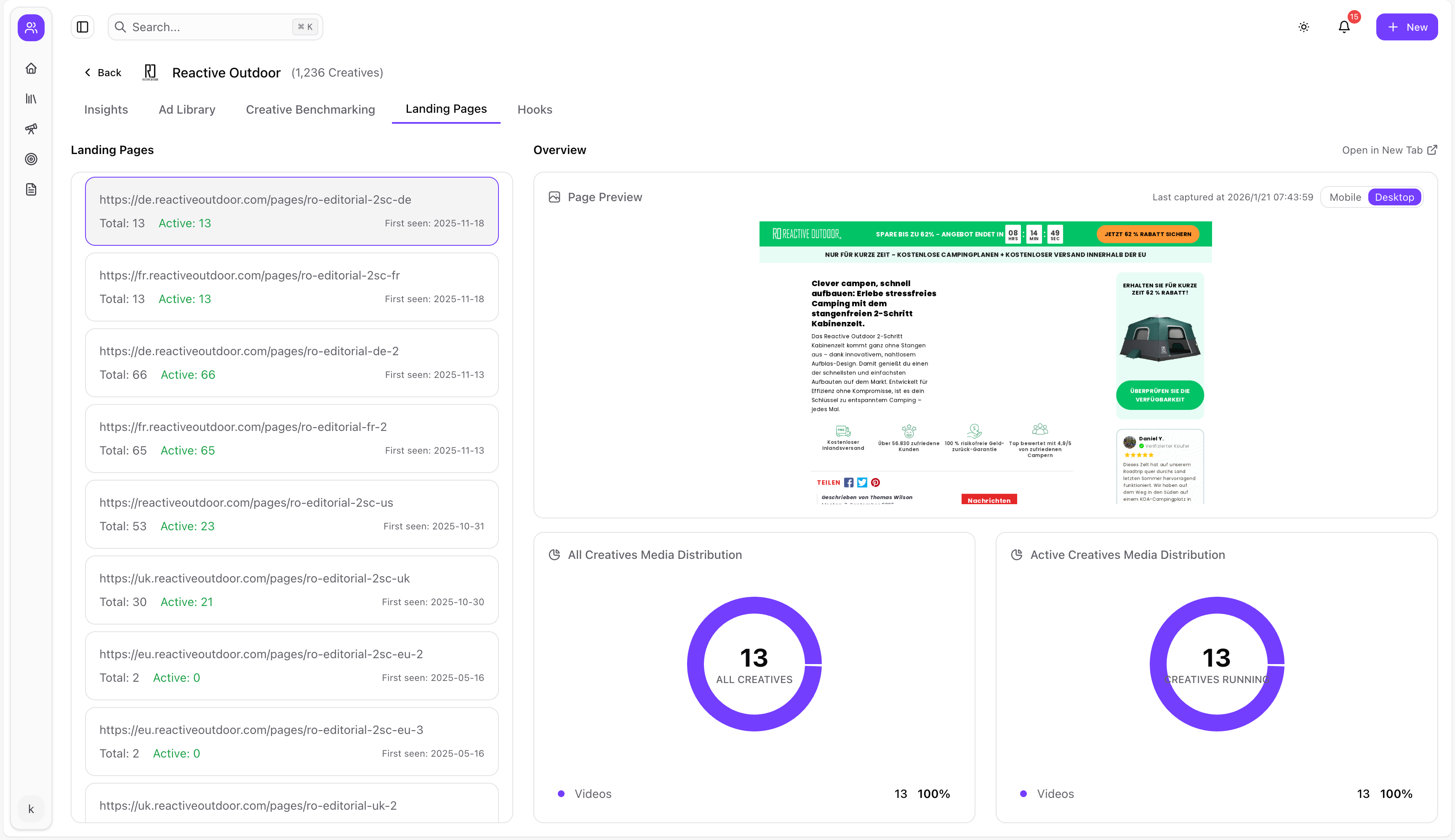
Step 5) Capture landing page intel
A new landing page is often a strategy pivot.
Adlude Spyer can auto-capture mobile and desktop landing page screenshots and track pages per brand.
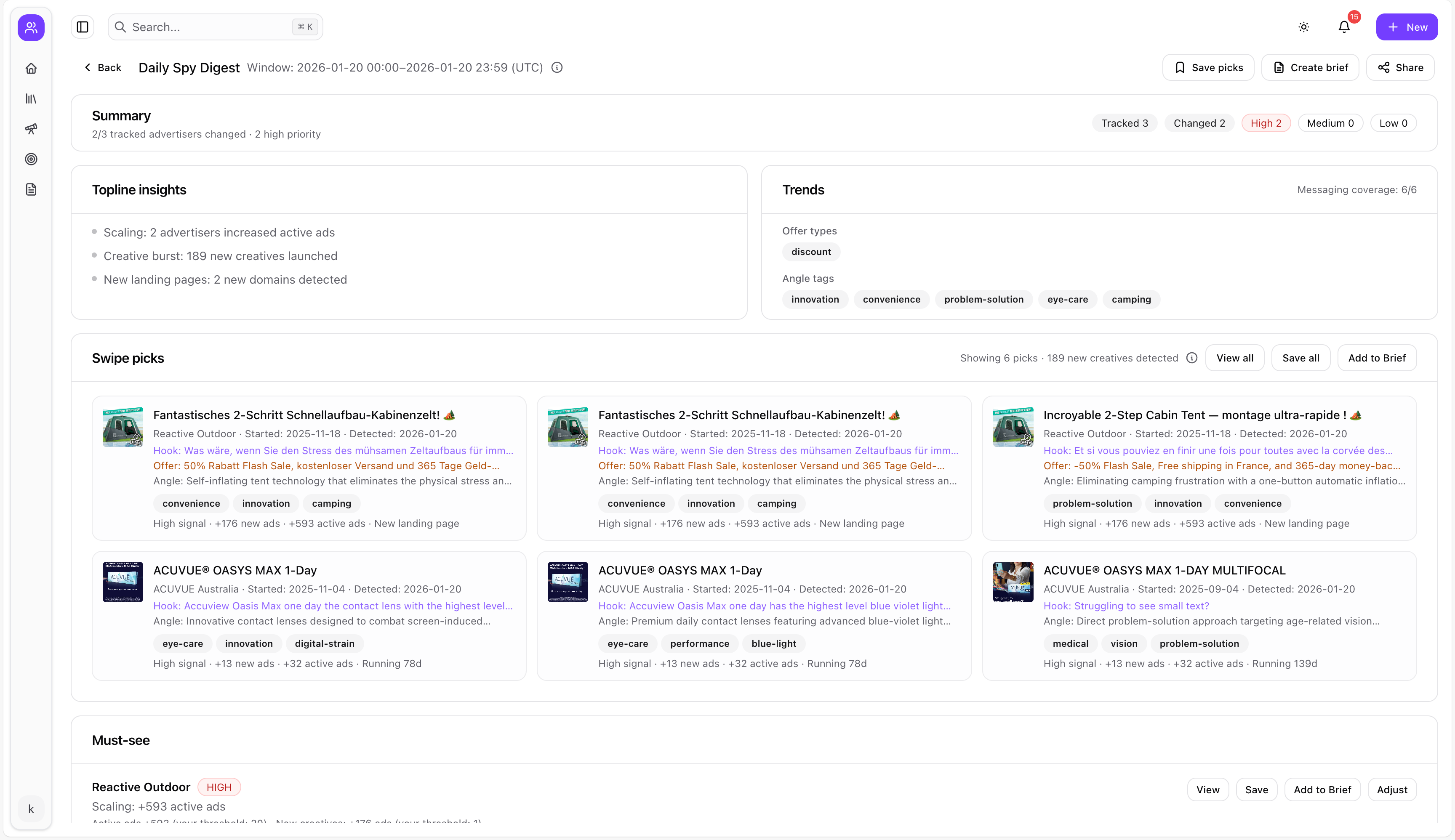
Daily digest template
Use a simple digest so your team can act quickly:
Daily Competitor Digest
- New creatives: (Brand → count → link)
- Notable hooks: (hook text + theme)
- Offer changes: (what changed?)
- Landing page changes: (new page / new angle)
- What we should test next: (1–3 hypotheses)
Adlude Spyer offers “Daily Intel Digest” as part of competitor monitoring.
Common mistakes
Mistake 1: tracking 50 competitors
Start with 5–10. Add more only if you have a clear reason.
Mistake 2: confusing “new” with “winning”
New is cheap. Persistence is expensive.
Mistake 3: ignoring landing pages
Creative and landing page are one system—track both.
Use Adlude Spyer to automate it
Adlude Spyer is built to track competitor ads 24/7 and surface high-signal patterns:
- Always‑On Tracking + real-time sync
- Real-time alerts (in-app + email) with thresholds
- Brand insights dashboard (active ads, new creatives, distribution)
- Creative A/B test analysis (group by launch date, infer testing)
- Trending Hooks Tracker (sort hooks by run time)
- Landing page screenshots (mobile/desktop)
FAQ
Is competitor ad tracking legal?
Using public ad transparency libraries and publicly visible ad creatives for analysis is a common marketing practice. Always respect copyright and don’t repost competitor assets as your own.
Will I see competitor ROAS or spend?
Most public libraries don’t provide full performance metrics for standard commercial ads. Focus on patterns: lifecycle, repetition, hooks, landing page strategy.
How often should we review competitor insights?
Daily digest for awareness; weekly review for decisions; monthly deep-dive for strategy.
What’s the best “winner signal”?
Long-running hooks + stable concepts + landing page consistency are strong proxies.